Why This Certification Matters

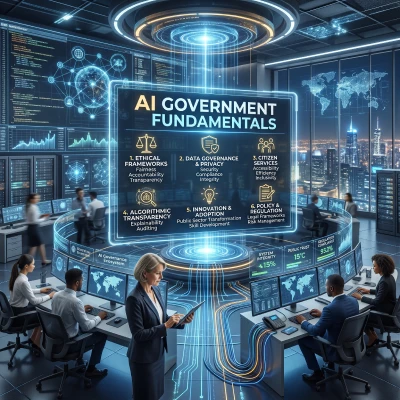
  • AI in Government: Understand how AI supports public sector innovation.

  • Policy Analysis: Apply machine learning to policy analysis and decision-making.

  • Governance and Ethics: Strengthen transparency, security and ethical AI use.

  • Public Service Applications: Explore AI for fraud detection, public safety and citizen services.

  • Smart Infrastructure: Learn how AI supports smart cities and geospatial analysis.

  • Adoption Planning: Plan AI integration across government systems.

At a Glance: Course + Exam Overview

Program Name
AI+ Government Fundamentals™
Included
Instructor-led OR Self-paced course + Official exam + Digital badge
Prerequisites
Basic networking knowledge, Python familiarity, fundamental AI/ML concepts
Exam Format
50 questions, 70% passing, 90 minutes, online proctored exam
Delivery
Online labs, projects, case studies
Outcome
Industry-recognized credential + hands-on experience

Who Should Enroll?

  • Government officials and policy makers.

  • Data scientists and analysts.

  • Public sector IT professionals.

  • Cybersecurity experts.

  • Students and new graduates.

  • Professionals interested in AI in the public sector.

Skills You'll Gain

Machine Learning for Policy AnalysisAI-Driven Fraud DetectionAutomated Decision-Making SystemsAI in Smart Cities and InfrastructureGeospatial Data Analysis with AI

What You'll Learn

  • AI for Governance: Understand how AI transforms public governance and policy frameworks
  • Data & ICT Focus: Dive into data management algorithms, ICT techniques, and AI strategies for government
  • Ethical Implementation: Gain expertise in responsible AI integration and policymaking
  • Outcome-Oriented: Design AI-driven solutions that promote transparency and operational efficiency

  • Course IntroductionPreview

  • 1.1 Introduction to Artificial Intelligence
  • 1.2 AI in Government and Public Administration
  • 1.3 AI Applications Across Government Sectors
  • 1.4 Benefits and Challenges of AI Adoption
  • 1.5 Introduction to Generative AI and AI Assistants
  • 1.6 AI in Daily Government Workflows

  • 2.1 Fundamentals of AI Governance
  • 2.2 Ethical and Responsible AI Practices
  • 2.3 Privacy, Security and Compliance
  • 2.4 AI policies and internationals perspectives
  • 2.5 AI Misuse and Risk Awareness
  • 2.6 Hands-on Activity: Responsible AI Governance and Risk Analysis Using ChatGPT

  • 3.1 Fundamentals of Government Data Management
  • 3.2 AI-Based Data Processing and Analytics
  • 3.3 Data Quality and Bias Awareness
  • 3.4 Privacy and Secure Data Handling
  • 3.5 Practical Government Data Applications
  • 3.6 Hands-on Activity

  • 4.1 AI in Education and Skills Development
  • 4.2 AI Tools for Learning and Training
  • 4.3 Inclusive and Accessible Learning Systems
  • 4.4 ICT and Digital Learning Platforms
  • 4.5 Generative AI for Education
  • 4.6 Hand-On Activity

  • 5.1 AI in Public Safety and Smart Governance
  • 5.2 AI in Disaster Management and Emergency Response
  • 5.3 AI in Healthcare and Public Welfare
  • 5.4 Ethical and Privacy Considerations
  • 5.5 Real-world Government Applications

  • 6.1 AI-Enabled Citizen Services
  • 6.2 Chatbots and Virtual Assistants
  • 6.3 Accessible and Inclusive Government Services
  • 6.4 AI Platforms for Citizen Engagement
  • 6.5 AI-based emergency and support system
  • 6.6 Government AI Portal Case Studies

  • 7.1 AI Adoption in Government Organizations
  • 7.2 Planning AI Projects
  • 7.3 AI Integration with Existing Systems
  • 7.4 AI Automation and Productivity Tools
  • 7.5 Best Practices and Case Studies

  • 8.1 Future of AI in Governance
  • 8.2 Generative AI and Conversational Systems
  • 8.3 Intelligent Automation and Smart Systems
  • 8.4 Emerging Technologies and Innovations
  • 8.5 Sustainable and Responsible Future AI
  • 8.6 Future-Oriented Practical Exposure
  • 8.7 Real- World Case Studies

  • 1.1 What Are AI Agents in Government
  • 1.2 Significance of AI in Government Operations
  • 1.3 Core Applications of AI Agents in Government
  • 1.4 Trends and Future Directions

Tools You'll Master

IBM Watson Government
Microsoft Azure Government
Palantir Gotham
Accela Civic Platform

Prerequisites

  • Basic programming skills, such as Python.
  • Understanding of public sector structures and workflows.
  • Data handling and basic preprocessing skills.
  • Familiarity with basic machine learning concepts.
  • Awareness of government regulation and AI ethics.

Exam Details

Duration
90 minutes
Passing Score
70% (35/50)
Format
50 multiple-choice/multiple-response questions
Delivery Method
Online via proctored exam platform (flexible scheduling)

Exam Blueprint:

  • Introduction to AI in Government - 7%
  • AI Governance and Policy Frameworks - 15%
  • AI Driven Data Management and Governance - 15%
  • AI in Education and Skills Development - 15%
  • AI for Public Safety, Healthcare and Emergency Response - 12%
  • AI for Citizen Services and Public Interaction - 12%
  • AI Adoption and Integration in Government Systems - 12%
  • Future Trends and Emerging AI Technologies in Government - 12%

Choose the Format That Fits Your Schedule

What's Included (One-Year Subscription + All Updates):

  • High-Quality Videos, E-book (PDF & Audio), and Podcasts
  • AI Mentor for Personalized Guidance
  • Quizzes, Assessments, and Course Resources
  • Online Proctored Exam with One Free Retake
  • Comprehensive Exam Study Guide
  • Access for Tablet & Phone
Instructor-Led (Live Virtual/Classroom)
  • 1 day (live or virtual) Self-Paced: 8 hours of content
  • Real-time Q&A, peer collaboration, and hands-on labs
  • Led by AI Certified Trainers and delivered through Authorized Training Partners
Self-Paced Online
  • 8 hours of content
  • Learn anywhere, anytime, with modular quizzes to track progress
Purchase Self-Paced Course
Need More Flexibility?

Need More Flexibility?

To help you along your way, we can help you set up a customizable payment plan. Just book a call, we’ll provide you with the details!

Let's Arrange a Call

9/10 of our learners achieve their learning objectives after successful completionProcess Advisors

fortray global services

Hear it from our Alumni

fortray global services Success Stories
The course provided me with a solid understanding of IT service desk operations and troubleshooting techniques. It has improved my ability to handle user issues with confidence and professionalism.
Anu Lanish
Anu Lanish

IT Service Desk Technician

The course gave me a clear understanding of network security concepts and practical exposure. It helped me build confidence in handling real-world security tasks.
Rahul Raj Nalam
Rahul Raj Nalam

Network Security (Traineeship)

My path to cloud architecture had its hurdles, but Fortray was there every step of the way. They provided valuable insights into cloud technologies and architectural design. With their guidance, I turned challenges into opportunities, and today, as a Cloud Architect, I help organizations leverage the cloud for their growth and success.
Lokeshwar Reddy
Lokeshwar Reddy

Cloud Architect

The path to becoming a Cybersecurity Engineer felt like decrypting an impossible algorithm—until Fortray provided the key. Their mentorship was like a robust IPS, detecting and eliminating my weaknesses while optimizing my strengths. Now, I stand as a protector in the ever-evolving IT landscape, proud to carry their legacy forward.
Mohammad Owais
Mohammad Owais

Cybersecurity Engineer

This course strengthened my full-stack development skills and practical understanding. I am more confident in building and managing complete web applications.
Niraj Sah
Niraj Sah

Full Stack Web Developer

This course improved my understanding of project management methodologies and workflows. I gained practical skills to plan and execute projects effectively.
Naga Manikanta Kartheek

Project Management

The course provided valuable hands-on experience in data analysis tools and techniques. It enhanced my ability to extract meaningful insights from data.
Arsha Amir Khan
Arsha Amir Khan

Data Analyst

The training helped me build strong analytical skills and understand how to work with real-world data science problems effectively.
Sai Praneeth Reddy
Sai Praneeth Reddy

Data Scientist

The course helped me understand automation testing frameworks and best practices. I gained practical experience in writing and executing automated test cases.
Subbhashree Varatharajan

Automation Test Engineer

Frequently Asked Questions

It teaches how AI can be applied responsibly in government and public services. The course covers eight modules, from AI governance and data management to citizen services and future trends.

You will develop skills in machine learning for policy analysis, fraud detection, automated decision-making and geospatial analysis. An optional module covers AI agents for government.

The programme lists an understanding of public sector systems as a prerequisite. It is aimed at government and public sector professionals, as well as students and graduates.

AI can support fraud detection, public safety, citizen services and smart city planning. Transparency, security and ethical oversight are essential.

It can help build skills relevant to public sector innovation, data and digital roles. Career outcomes depend on your experience and individual employer requirements.

Buy Now