The course provided me with a solid understanding of IT service desk operations and troubleshooting techniques. It has improved my ability to handle user issues with confidence and professionalism.



Formerly known as AI+ Game Design Agent™ Empower creators with AI+ Game Design Agent Specialty™ to craft intelligent, dynamic, and immersive gaming experiences.
Comprehensive Skill Development Master AI-driven game design by integrating procedural generation, adaptive storytelling, and intelligent NPC behavior to create immersive, dynamic gaming experiences.
Industry Recognition Earn a globally recognized certification that highlights your expertise in blending artificial intelligence with creative game development.
Hands-On Learning Practice with real-world projects involving AI-based level design, character behavior modeling, and player experience optimization to sharpen your practical game design skills.
Career Advancement Explore opportunities in AI game development, interactive design, and simulation engineering across gaming studios, tech companies, and entertainment platforms.
Future-Ready Expertise Stay ahead in the next era of gaming innovation with deep knowledge of generative AI, autonomous systems, and adaptive gameplay design.
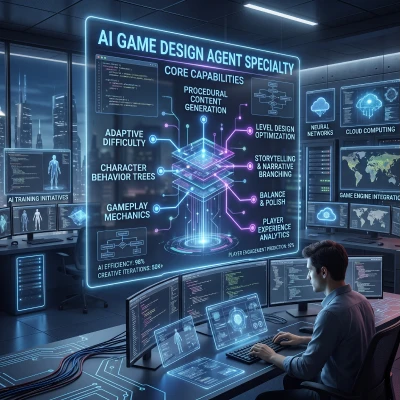
Next-Gen Game Creation Learn to design intelligent, adaptive games that respond dynamically to player behavior and choices.
Industry-Relevant Expertise Gain skills at the intersection of AI, creativity, and game design—highly sought after in modern studios.
Hands-On Innovation Build real-world projects integrating AI-driven storytelling, procedural worlds, and smart NPC systems.
Career Acceleration Stand out for roles in AI game development, systems design, and creative technology leadership.
Future-Ready Skills Prepare for the evolving gaming landscape where AI shapes creativity, engagement, and interactive storytelling.
Aspiring Game Designers – Perfect for those who want to integrate AI into storytelling, mechanics, and player experiences.
AI Enthusiasts – Ideal for learners eager to explore how AI can enhance creativity and interactivity in games.
Game Developers – Great for professionals aiming to build intelligent systems, adaptive gameplay, and smart NPCs.
Digital Artists – Excellent for creatives interested in using AI to design immersive environments and dynamic game elements.
Tech Entrepreneurs – Ideal for innovators looking to leverage AI in building the next generation of interactive gaming platforms.















What's Included (One-Year Subscription + All Updates):

To help you along your way, we can help you set up a customizable payment plan. Just book a call, we’ll provide you with the details!
Let's Arrange a Call9/10 of our learners achieve their learning objectives after successful completionProcess Advisors


Yes, this certification provides hands-on experience with real game development tools and AI frameworks. You'll be ready to design intelligent gameplay, adaptive environments, and AI-driven characters for real-world gaming projects.
This certification uniquely merges creative game design with artificial intelligence, focusing on adaptive storytelling, procedural world-building, and intelligent gameplay mechanics that redefine interactive entertainment.
You'll work on AI-driven game prototypes, smart NPC systems, procedural content generation, and adaptive gameplay simulations—building the foundation for next-generation gaming experiences.
This course blends expert-led sessions, practical labs, and project-based learning using real game engines and AI tools to ensure you master both creative design and technical implementation.
It equips you with the technical and creative skills needed for roles in AI game development, interactive design, and game innovation—making you job-ready for the rapidly evolving gaming industry.
Explore our hand-picked certifications trusted by industry leaders. Compare career paths, exam details, and salary insights to find the credential that matches your goals and accelerates your growth.