

Key Takeaways
- US employers now hire marketing talent faster when skills come from focused training.
- A career in marketing no longer needs a four-year degree to start strong.
- Twelve-week programs align closely with real hiring needs in tech jobs USA.
- Practical e-learning delivers job-ready skills faster than traditional education.
- Job-guarantee models reduce hiring risk for both candidates and companies.
A career in marketing has changed more in the last five years than in the previous two decades. US companies now prioritize skills, speed, and real results over long academic timelines.
According to LinkedIn’s 2024 Workforce Report, 75% of hiring managers value skills-based hiring over degrees, especially for entry and mid-level roles. Meanwhile, the US Bureau of Labor Statistics projects 10% growth in marketing-related tech roles by 2032, faster than the national average.
Because of this shift, companies increasingly hire candidates after just 12 weeks of structured training. These candidates arrive with hands-on experience, industry tools exposure, and job-ready confidence.
At the same time, e-learning platforms, IT Programs, and IT training and job placement models have changed how people enter IT jobs USA and marketing roles alike. Instead of waiting for years, candidates now enter entry-level tech jobs in months. That speed benefits both employers and job seekers across tech jobs in America.
Career in Marketing: Why US Companies Trust 12-Week Training Models
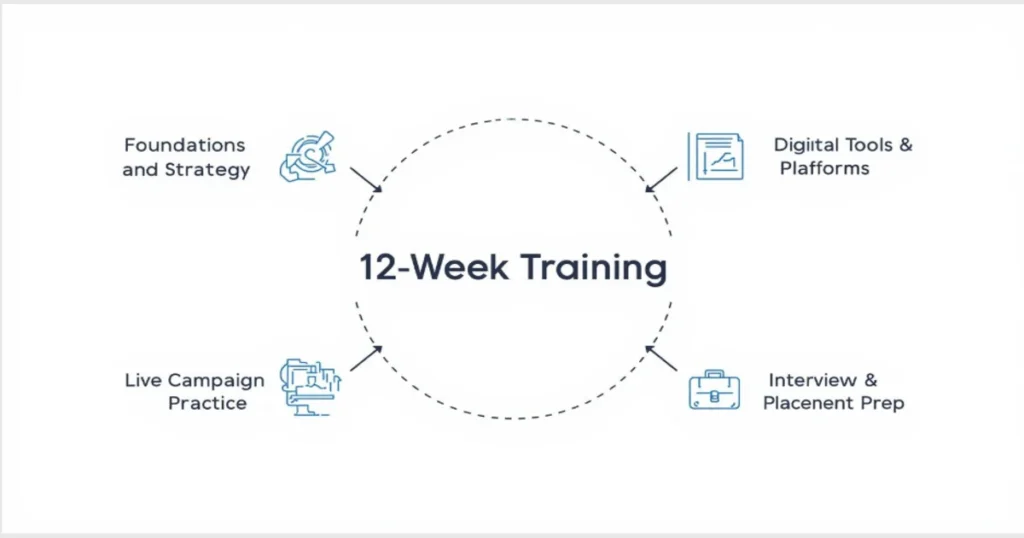
A career in marketing depends on execution, not theory. US companies know this well. Therefore, they prefer candidates who can run campaigns, analyse data, and optimize funnels from day one. Twelve-week programs focus on exactly that.
These programs mirror the structure used in technical IT roles such as Data Analyst, Business Analyst, and AI & Machine Learning tracks, as each week builds practical skills. Each project reflects real workplace scenarios; this helps hiring managers see less onboarding time and faster productivity. Why employers prefer this model:
- Candidates understand tools like Google Analytics, CRM systems, and automation platforms.
- Training aligns with modern IT roles and digital-first workflows.
- Employers reduce hiring risk while improving output.
Moreover, marketing now overlaps heavily with Cloud Computing, Data Analyst, and Digital Marketing functions. Data-driven decisions dominate campaigns; this allows structured training to blend with marketing with analytical thinking. Because of this alignment, US companies increasingly treat marketing as part of the broader tech jobs ecosystem.
Skills US Employers Expect from Marketing Candidates Today
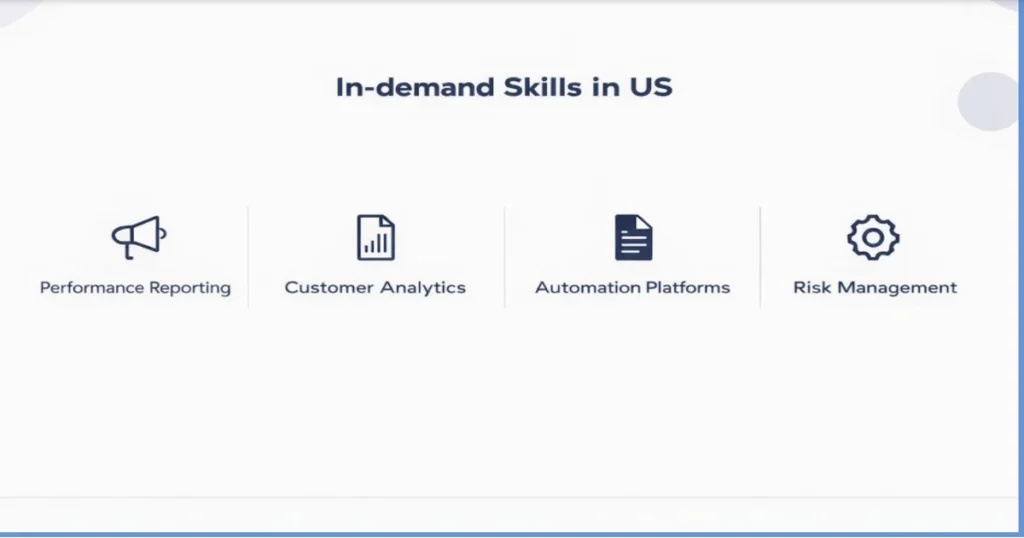
Modern marketing roles require more than creativity. A career in marketing now blends technology, analytics, and business strategy. Therefore, training programs prioritize skills that match employer demand. Core skills employers look for:
- Data analysis and reporting skills like Data Analyst roles
- Customer journey mapping linked to Business Analyst frameworks
- Marketing automation tied to Cloud Architect and AWS Cloud Architect tools
- Cyber awareness influenced by Cybersecurity Analyst best practices
Additionally, e-learning allows candidates to practice these skills daily. That practice builds confidence and competence faster than classroom theory. Because of that, employers trust candidates from IT Programs and job-ready marketing tracks.
Furthermore, many high-paying tech jobs now sit at the intersection of marketing and technology. Growth marketing, performance marketing, and marketing analytics fall directly under tech roles and IT careers.
How 12-Week Programs Match Tech Hiring Demand in the USA
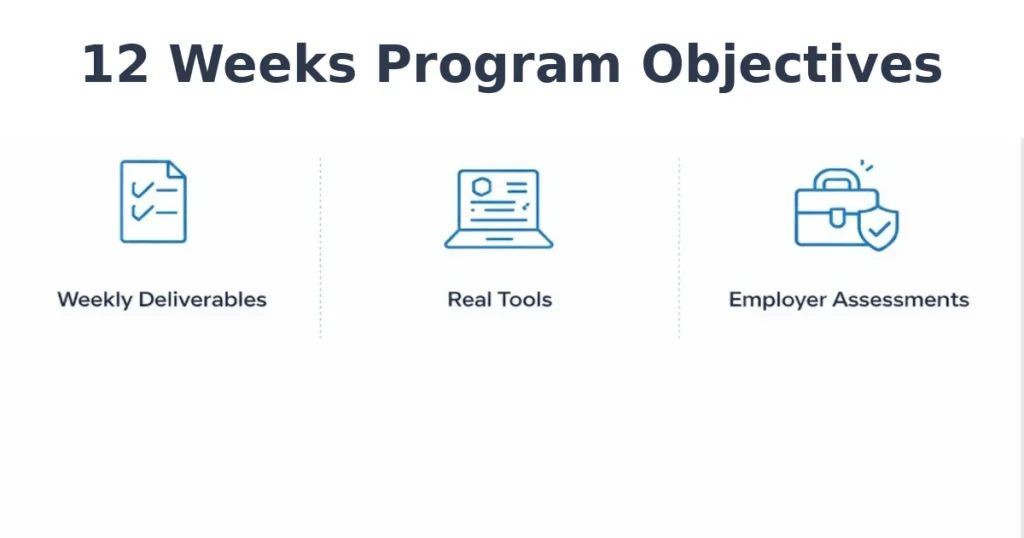
US companies move fast, and therefore, hiring models must match that pace. A career in marketing built through short-term training fits perfectly into this reality. Unlike traditional education, these programmes follow sprint-based learning. Each sprint mirrors real-world tasks used in IT jobs USA and marketing roles.
For example, campaign testing resembles A/B testing used in AI & Machine Learning workflows, and reporting dashboards reflect Data Analyst tools, whereas automation mirrors DevOps Engineer pipelines. What makes these programmes effective:
- Weekly deliverables instead of exams
- Practice with real tools used in tech jobs
- Employer-aligned assessments
Because of this structure, candidates are highly preferred for entry-level tech jobs with no experience categories with practical exposure. Employers save time and candidates gain faster access to tech job salaries and growth opportunities. As a result, high paying tech jobs now open doors to marketing professionals trained through focused programmes.
E-Learning and Job Guarantee Models Are Reshaping Marketing Careers

E-learning plays a major role in the success of modern marketing careers. A career in marketing now relies on continuous learning rather than one-time education. Online platforms allow candidates to upskill while adapting to industry changes.
These models resemble training paths used in Cybersecurity Engineer, Cloud Security Engineer, and Network Security Expert programs. They emphasise outcomes, not attendance. Benefits of job-guarantee training:
- Reduced financial risk for candidates
- Better alignment with employer demand
- Faster entry into IT careers and marketing roles
Moreover, IT training and job placement models help candidates transition into entry tech roles smoothly. Marketing no longer stands alone. Instead, it integrates broader tech careers across analytics, cloud, and automation. Because of that, employers see marketing hires as long-term assets rather than short-term experiments.

My journey had its challenges, but Fortray supported me at every step. Their guidance gave me clarity, confidence, and the skills to grow and succeed.
Lokeshwar R.Conclusion
A career in marketing no longer follows a traditional path. Twelve-week programs deliver exactly what employers need: skills, confidence, and real-world readiness.
At the same time, marketing now aligns closely with IT roles, tech careers, and high-paying tech jobs. Data, automation, and strategy define success. Therefore, employers trust candidates trained through structured e-learning and job-focused programs.
Fortray supports this shift through its recruitment services and career change programs. Fortray connects candidates with IT jobs USA, marketing roles, and technology jobs USA through job-guarantee models.
These programs ensure placement support and offer a refund if a candidate does not secure a job, reducing risk for learners while meeting employer needs. Because of this approach, Fortray helps professionals transition into IT careers and marketing roles with confidence, clarity, and real outcomes.
Ready to start your career in marketing with job-ready training? Explore structured programmes that align with US hiring needs and secure real placement support.
Frequently Asked Questions (FAQ)
Yes. Many entry level tech jobs now accept candidates from structured training with hands-on projects. These programs focus on real tools and campaigns, which help beginners compete confidently in the job market.
Because these programs focus on real skills that match tech jobs in America. Employers value speed-to-productivity, and short training reduces onboarding time significantly.
Yes. Data, automation, and analytics connect marketing directly with IT roles. Many marketing professionals now work closely with Data Analysts, Cloud teams, and AI-driven platforms.
Yes. Employers trust them because they reduce hiring and training risks. Candidates also benefit because placement support aligns directly with real company demand.
Marketing professionals in tech jobs earn competitive tech job salaries, especially in data-driven roles. With experience, many move into high paying tech jobs across growth marketing and analytics.








I once doubted my path, but Fortray guided me with clarity and purpose. Their mentorship gave me confidence and direction for my journey ahead.
Marco Baffetti Data Analyst