Key Takeaways
- Soft Skills Shift: In modern tech hiring, soft skills increasingly determine long-term performance, collaboration, and leadership potential beyond technical ability.
- Hard Skills aren’t Enough Now: Employers relying solely on hard skills risk poor team alignment, communication breakdowns, and higher attrition rates.
- AI and Automation Impact: As automation advances, uniquely human soft skills become critical differentiators within technical and digital roles.
- Hybrid Work Reality: Remote and hybrid teams require strong communication, adaptability, and emotional intelligence to maintain productivity and trust.
- Fortray Smart Recruitment prioritises soft skills assessment alongside hard skills to ensure culturally aligned, future-ready tech hires.
Introduction
For years, tech hiring has revolved around the core hard skills! Programming languages, cloud certifications, frameworks, and tools have dominated job descriptions and interview processes. But despite record investment in digital talent, many organisations still struggle with poor collaboration, failed projects, and high attrition.
The problem isn’t a lack of technical ability… It’s the absence of human capability! 74% of tech firms in the United Kingdom now value soft skills such as communication, collaboration, and problem-solving just as much as (or more than).
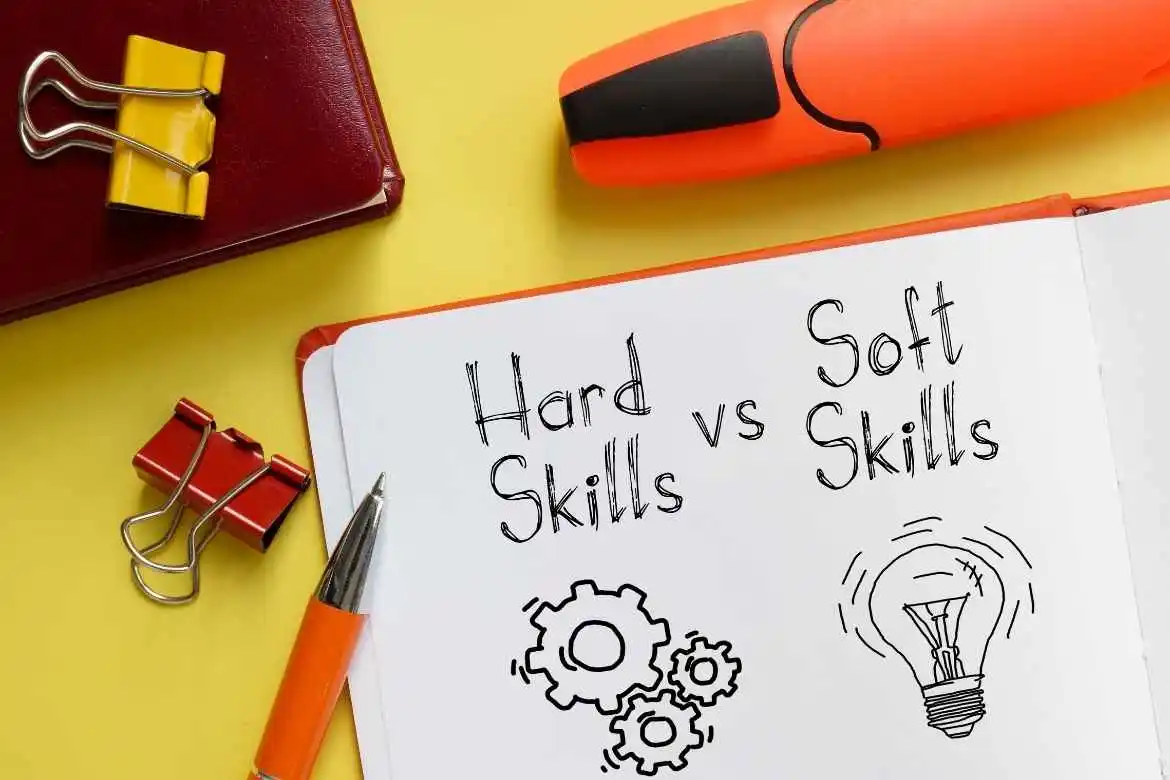
In a world of agile teams, hybrid work, and AI-assisted development, technical competence without communication, adaptability, and emotional intelligence is no longer enough. In this blog, we’re exploring the ‘missing link‘ in tech hiring and why soft skills are quickly becoming the new hard skills.
Why Hard Skills No Longer Guarantee Success?
Hard skills remain essential, and no organisation can compromise on technical competence. However, technology itself has changed how work gets done!
Modern tech roles operate in cross-functional environments. Engineers collaborate with product managers, designers, compliance teams, and clients. AI tools now accelerate coding, testing, and deployment, reducing the technical gap between candidates. But there’s something else… AI cannot replace judgment, collaboration, leadership, and decision-making.
The study by McLean & Company states that when leaders are highly effective at people leadership, organisations are 2.3x more likely to be high performers in innovation and agility.
Once communication, adaptability, and these skills are missing, even highly skilled engineers struggle to deliver business outcomes. This shift is forcing employers to rethink what “talent” actually means in 2026 and beyond!
Recommended Reading: Recruiting for the AI-First Enterprise: Beyond Data Scientists
What are Soft Skills — and Why They Matter More in Tech Today?
The soft skills refer to the human capabilities that determine how effectively someone works with others and adapts to change. The top soft skills employers are looking for are analytical thinking, resilience, flexibility, and agility; leadership and social influence; creative thinking; and motivation and self-awareness, according to a report by the World Economic Forum.
Unlike hard skills, soft skills compound over time! A technically strong developer with weak collaboration slows teams down. A moderately skilled engineer with strong communication often accelerates outcomes.
In distributed and hybrid teams, this difference becomes even more visible. Without face-to-face interaction, clarity, ownership, and empathy, productivity and retention suffer.
For employers, this means that hiring for soft skills is no longer a “nice to have,” it is a risk-management strategy!
Recommended Reading: The Rise of FinOps: Why Your Cloud Team Needs Financial Literacy?
The Impact of Soft Skills on Retention and Performance
One of the most overlooked costs in tech hiring is mis-hire attrition. Many tech professionals leave their roles not because of the work itself, but due to poor leadership, unclear expectations, or toxic team dynamics.
70% of employee engagement is influenced by managers, not job roles. That engagement is driven by soft skills — feedback, trust, communication, and emotional intelligence.
Employers in the United Kingdom are investing heavily in tech talent, but often overlook the importance of soft skills. In return, they face high churn rates despite competitive salaries, struggle with poor cross-team collaboration, and experience delays in digital transformation initiatives.
This is why retention-focused recruitment, a core part of Fortray Smart Recruitment approach, places equal emphasis on behavioural and technical fit.
Recommended Reading: What is Employee Value Proposition, and Why It Matters?
Why Soft Skills Are Critical in AI-Driven Tech Environments?
Artificial Intelligence has fundamentally changed how technical work is done. Code generation, testing, debugging, and even architecture recommendations are increasingly automated. Resultantly, the value of purely technical differentiation is shrinking!
So, asking the right questions, evaluating AI outputs critically, communicating trade-offs to stakeholders, and making ethical and business-aligned decisions are becoming increasingly important.
Analytical thinking, creativity, and emotional intelligence are among the top skills for the next decade, even in highly technical roles. These skills directly influence delivery speed, innovation, and client satisfaction — especially in cloud, cybersecurity, data, and AI-driven roles.
In AI-augmented teams, soft skills are what separate operators from leaders. Fortray integrates behavioural assessment into its recruitment processes, ensuring candidates can succeed beyond the CV.
How Fortray Identifies Soft Skills in Tech Hiring?
Traditional recruitment methods are not well-designed to assess soft skills. CVs list tools instead of behaviours. Interviews often focus on hypothetical technical questions rather than real-world collaboration!
Smart Recruitment methodology addresses this gap through:
- Structured behavioural interviews aligned to role realities
- Scenario-based assessments that mirror workplace challenges
- Culture-fit evaluation alongside skills validation
This model has consistently improved retention and performance outcomes across the sector expertise at Fortray, including Digital Infrastructure, Cloud, Cybersecurity, Data, and Engineering.
What This Means for Candidates and Tech Professionals?
For job seekers, this shift is an opportunity, not a threat!
The candidates who invest in communication, leadership, and adaptability significantly improve their employability, even in competitive markets. Technical skills may open doors, but it is soft skills that determine career progression.
Fortray works with candidates and trainees to help them understand what employers really value, positioning them for long-term success rather than short-term placements.
Actionable Steps for Employers
To close the soft skills gap in tech hiring, employers should reassess job descriptions to include behavioural expectations, train hiring managers to evaluate soft skills objectively, and partner with recruitment specialists who understand both technology and people.
Hiring less frequently but more effectively reduces attrition, improves team performance, and strengthens employer brand credibility.
Explore Services: Reliable Talent for Long-Term Role
Conclusion
Hard skills will always matter… But in a world shaped by AI, hybrid work, and constant change, they are no longer enough on their own!
The future of tech hiring belongs to organisations that recognise soft skills as strategic capabilities, not secondary traits. The Fortray Smart Recruitment helps employers bridge this gap — hiring tech professionals who deliver results, collaborate effectively, and grow with the business.
Talk to our Experts Today, because in modern tech hiring, soft skills aren’t soft anymore, they’re essential to build resilient and high-impact teams!
Frequently Asked Questions (FAQs)
Soft skills enable tech professionals to collaborate, communicate, and adapt effectively, making technical expertise more impactful in real-world business environments.
Communication, problem-solving, adaptability, emotional intelligence, and collaboration are now critical soft skills alongside technical hard skills.
Candidates with strong soft skills integrate more effectively into teams, handle change more effectively, and remain more engaged, which reduces turnover and performance issues.
Traditional hiring focuses heavily on technical testing, often overlooking behavioural assessment, situational judgement, and cultural alignment indicators.
Fortray employs smart recruitment strategies that combine behavioural screening, role-based assessments, and value-aligned hiring to ensure long-term success.