Skip to main contentSkip to footer
Skip to content
Skip to main contentSkip to footer
Skip to content 

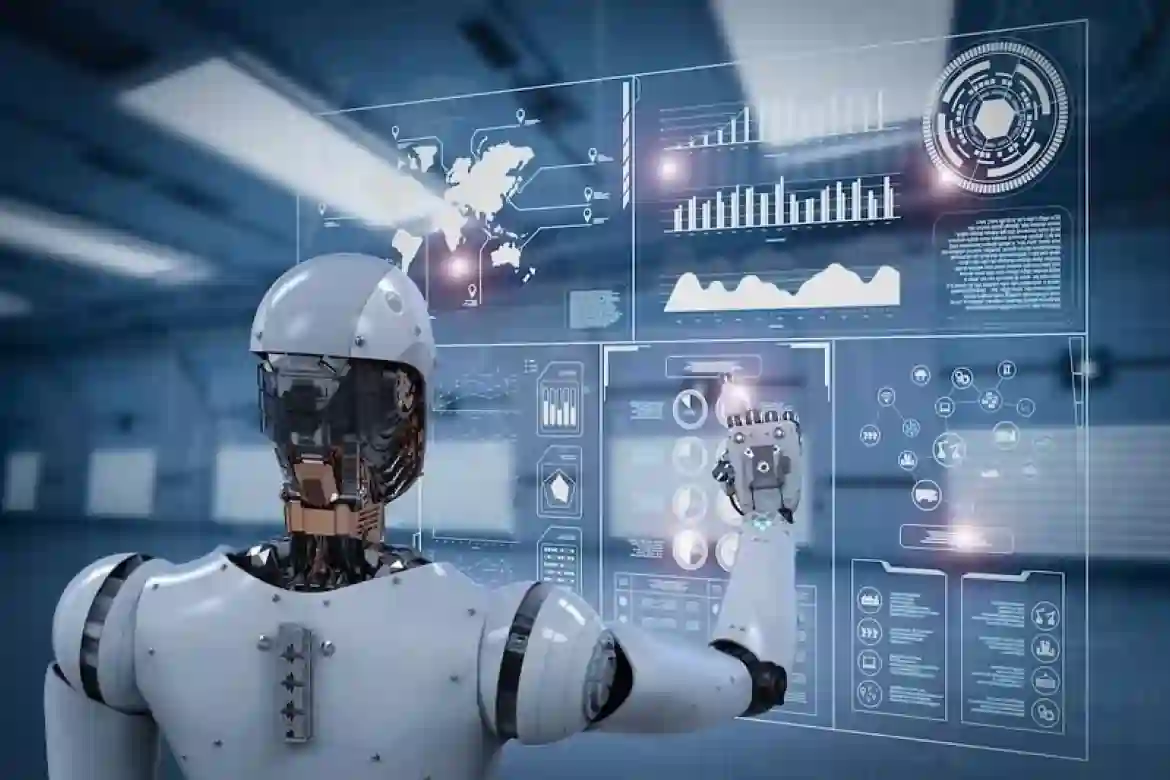
- AI is Transformative: AI is revolutionizing productivity across industries by automating routine tasks and providing valuable insights, leading to faster decision-making and operational efficiency.
- Augmentation Over Replacement: AI enhances human capabilities, allowing professionals to focus on critical thinking and creativity, rather than replacing them.
- Advantages vs. Disadvantages: While AI offers numerous benefits, such as increased productivity and innovation, it also poses challenges like potential job displacement and ethical concerns.
- Real-World Applications: AI is already making a significant impact in IT, from optimizing project management to predicting equipment maintenance needs.
- The Future of AI: Businesses should think big and integrate AI into their processes to stay competitive and unlock new possibilities.
Recently, while reading a blog online, I came across a fascinating story that caught my attention. The article mentioned a conference where a presenter demonstrated something truly mind-blowing: he fed brain scans from an MRI into an AI engine, which then reported back, “This person is thinking of a boat.” The AI was absolutely correct—the individual had indeed been daydreaming about a boat. While AI interpreting brain scans might seem like something out of a sci-fi movie, this example perfectly encapsulates how I’ve come to view the future of AI—summed up in one word: augmented.
The blog went on to mention Meta’s collaboration with Ray-Ban on smart glasses. Imagine walking through a bustling downtown area with directions to the latest hot restaurant or a cool museum exhibit displayed right on the inside of your lenses. This mixed-reality experience combines GPS with local maps, all enhanced by AI. It sounds futuristic, but it’s really just an extension of the AI-driven experiences many of us already enjoy in our daily lives—whether it’s AI in our cars monitoring traffic to ensure safe lane changes or in our emails, autocorrecting typos and suggesting responses based on context.
At Fortray, where we specialize in IT training and development, I constantly think about how AI can revolutionize our work processes. The integration of AI into work management systems isn’t just exciting—it’s transformative. These next breakthroughs will see AI impeccably augmenting our work lives, driving smarter and more efficient outcomes. This brings us to the broader debate on artificial intelligence and its potential uses for AI across various sectors. Use the form below to discover which AI career path aligns with your current skills and future plans.
Find Your IT Career Path
Answer 5 quick questions — get your personalised programme guide in seconds.
AI-Augmented Productivity in IT
The blog also mentioned how AI is increasing productivity in various industries, and it got me thinking about our work at Fortray. We’ve seen personally how AI improves productivity, especially in IT-driven projects. Many of our clients manage large-scale operations, such as global supply chains, complex software development, or enterprise-level cybersecurity. AI plays a fundamental role in these scenarios, whether it’s automatically generating applications for new IT projects, predicting potential delays, or optimizing data management to maintain integrity and compliance. The results are impressive: some companies have reported up to a 30% reduction in project timelines and a 25% increase in revenue due to more efficient operations.
However, as we explore the uses for AI, it’s important to also consider the advantages and disadvantages of artificial intelligence. One dire issue that AI helps resolve is what we call “Gray Work”—the time lost when employees rely on ad-hoc solutions that aren’t integrated with the main IT systems. This often leads to valuable data and best practices getting trapped in emails, spreadsheets, or disconnected software, making collaboration difficult. Gray Work is a productivity killer, with studies showing it can slow down project timelines by as much as 40%. AI tackles this head-on, streamlining processes and freeing up valuable resources.