Skip to main contentSkip to footer
Skip to content
Skip to main contentSkip to footer
Skip to content 

Key Takeaways
- Environmental Threat: Computer waste releases hazardous heavy metals that contaminate soil and UK groundwater if not managed properly.
- Legal Mandates: Businesses must adhere to UK WEEE regulations and secure certified disposal to avoid heavy financial penalties.
- Data Security: Secure hardware disposal prevents catastrophic data breaches, ensuring compliance with strict UK GDPR and privacy laws.
- Economic Value: Structured IT asset disposal recovers valuable rare earth metals, supporting a sustainable and efficient circular economy.
- Lifecycle Strategy: Extending hardware life through component upgrades reduces waste and lowers the total cost of IT ownership.
- Fortray provides expert managed IT services to automate compliant disposal and secure your organisation’s digital infrastructure.
Every laptop your business retires, every server you decommission, and every box of “we’ll deal with it later” monitors in the storeroom is computer waste in the making. Most organisations treat it as a logistics afterthought: a skip, a recycling collection, a problem for facilities.
In the UK, that mindset is increasingly expensive! Computer waste sits at the intersection of two regulators, a fast-growing environmental crisis, and one of the easiest data breaches an auditor can prove.
This article explains exactly what is computer waste, the scale of the issue in the UK, the legal exposure it creates, and how MSP manages it without turning your hardware refresh into a liability.
What Is Computer Waste?
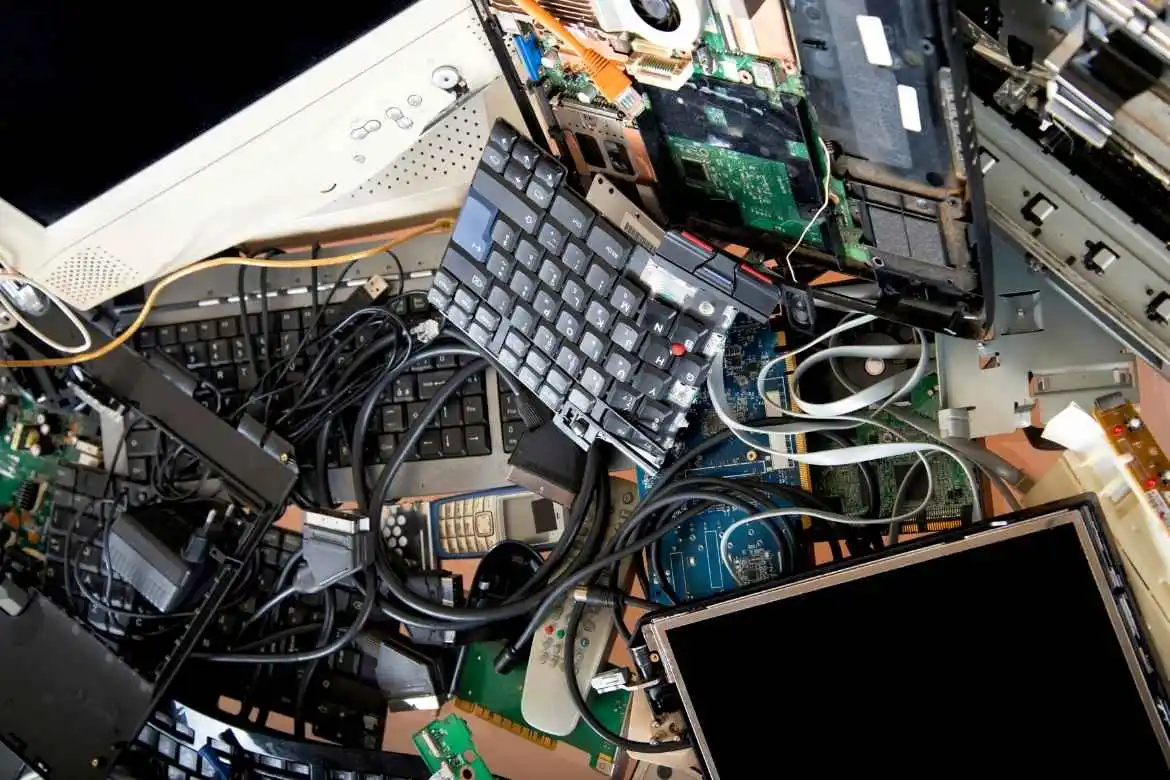
Computer waste is the portion of electronic waste (e-waste) made up of discarded computing equipment that has reached the end of its useful life. That includes desktops, laptops, servers, monitors, keyboards, networking gear, printers, external drives, and the storage media inside all of them. The Natural History Museum defines e-waste broadly as any discarded item with a plug, cord, or electronic component — and computing hardware is the part of that stream growing fastest in the workplace.
The device becomes waste long before it stops working! In a business setting, equipment is usually retired because of a refresh cycle, software that no longer runs on ageing hardware, lease expiry, or a change in headcount — not because it broke. That distinction matters: a large share of what businesses scrap is still functional, which is both a missed recovery opportunity and a live data risk.
It’s worth separating two things people conflate! The physical materials: metals, plastics, glass, and hazardous substances like lead and mercury are an environmental concern. The data held on storage media is a security and compliance concern. Responsible computer waste management has to solve both at once, and that’s where most informal “just recycle it” approaches fall apart.